
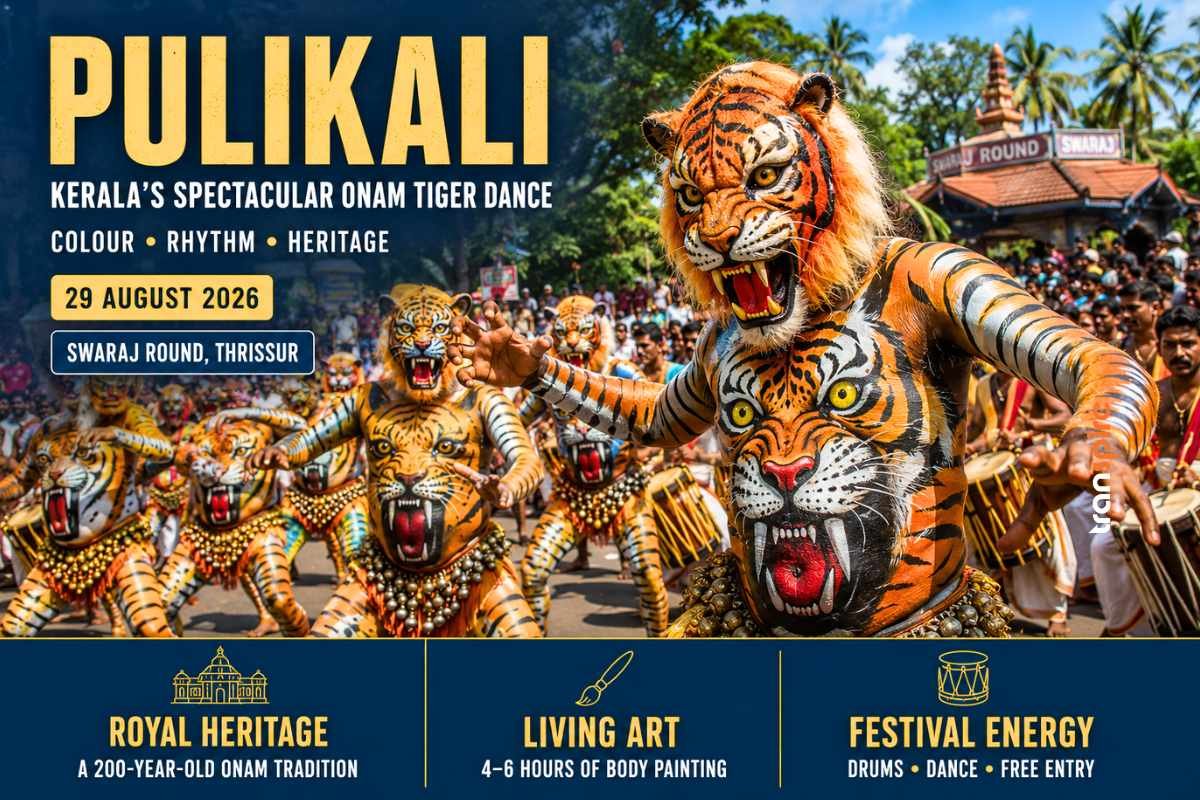
Discover Pulikali, Kerala’s famous Onam Tiger Dance in Thrissur. Learn its history, traditions, body painting, music, dates, and travel tips.
If you are looking for one of Kerala’s most exciting cultural experiences, Pulikali deserves a place at the top of your travel list. Every year during the Onam festival, the streets of Thrissur come alive with colorful tiger dancers, energetic drumbeats, and cheering crowds. This unforgettable celebration combines traditional art, music, and community spirit in a way that few festivals can match.
Unlike a stage performance, Pulikali unfolds on the streets, allowing visitors to become part of the celebration. From the incredible body painting to the lively parade, every moment offers a glimpse into Kerala’s rich cultural heritage.
What is Pulikali?
Pulikali, which means “Tiger Dance” in Malayalam, is one of Kerala’s most famous folk art traditions. Here, Puli means tiger, while Kali means play or dance.
The festival features performers whose bodies are painted to resemble tigers. Accompanied by powerful traditional drums, they dance, leap, and entertain thousands of spectators through the streets of Thrissur.
Although the performers look fierce, the atmosphere is joyful and family-friendly. Children, photographers, and tourists especially enjoy the colorful spectacle.
Why Pulikali is Special
Several factors make Pulikali unique:
- Stunning full-body tiger paintings
- Live traditional percussion music
- Street performances filled with energy
- A centuries-old Onam tradition
- Free public celebration for everyone
Pulikali History and Royal Origins
Pulikali is much more than entertainment. It is an important cultural tradition that reflects Kerala’s history and festive spirit.
The Beginning of Pulikali
The festival began more than 200 years ago during the rule of Sakthan Thampuran, also known as Maharaja Rama Varma of Cochin. He wanted to introduce a bold and energetic performance as part of the Onam celebrations.
A Royal Vision
The Maharaja encouraged local soldiers and performers to paint themselves like tigers and dance through the streets. Over time, this royal initiative grew into one of Kerala’s biggest cultural attractions.
A Tradition That Lives On
Today, Pulikali continues to unite artists, musicians, volunteers, and local communities. Every year, thousands of people gather to celebrate this colorful festival with great enthusiasm.
The Amazing Pulikali Body Painting Process
One of the biggest attractions of Pulikali is the incredible transformation of the performers.
Hours of Preparation
Creating the perfect tiger takes patience and skill. Most dancers begin preparing before sunrise.
The process includes:
- Shaving the body for a smooth surface
- Applying a bright yellow or orange base coat
- Painting realistic tiger stripes
- Adding detailed facial designs
- Allowing the oil paint to dry completely
Living Works of Art
Professional artists spend between 4 and 6 hours painting a single performer. Every tiger has its own unique design, making each dancer a moving masterpiece.
The Famous Tiger Belly
One of Pulikali’s most entertaining features is the painted tiger face on the dancer’s stomach. As performers move and shake their bellies, the tiger appears to roar, delighting the audience.
Teamwork Behind Every Performance
Behind every dancer is a dedicated team of painters, helpers, musicians, and organizers. Their combined effort ensures the parade runs smoothly every year.
Pulikali Music and Traditional Instruments
Music gives Pulikali its heartbeat. Without the powerful rhythms, the performance would lose much of its excitement.
Instruments Used During Pulikali
Traditional percussion instruments include:
- Thakil – Produces deep, thunderous beats.
- Udukku – Creates sharp and lively rhythms.
- Cymbals – Add energy and keep the tempo fast.
As the music builds, the painted tigers dance, jump, chase one another, and interact with the crowd. Meanwhile, performers dressed as hunters join the parade, adding humor and storytelling to the performance.
Where and When to Watch Pulikali
Planning your visit is easy if you know the festival schedule.
| Festival Details | Information |
|---|---|
| Location | Swaraj Round, Thrissur, Kerala |
| Festival | Onam |
| Main Event (2026) | 29 August 2026 |
| Celebration Day | Fourth Day of Onam (Nalam Onam) |
| Best Arrival Time | Around 2:00 PM |
Best Viewing Tips
For the best experience:
- Arrive early to secure a good viewing spot.
- Wear light cotton clothing.
- Carry drinking water.
- Bring a camera with extra batteries.
- Expect large crowds throughout the afternoon.

Trusted since 2013
Best Deal on Force Urbania Rental
Force Urbania Rental
- Transparent fares
- Professional chauffeurs
- Guaranteed pickup
- 24×7 support
Looking for a reliable Kochi taxi service from Kochi (Cochin)? Call or WhatsApp us now to reserve your vehicle today and enjoy a hassle-free journey.
Why Every Traveler Should Experience Pulikali
Watching Pulikali is about much more than seeing painted dancers. It is about feeling the energy of Kerala’s biggest cultural celebration.
You’ll hear the drums long before the parade reaches you. Then, colorful tigers appear from every direction, dancing through the streets with incredible enthusiasm. The excitement quickly becomes contagious.
Moreover, the festival showcases Kerala’s artistic talent, community spirit, and cultural pride. Whether you are a photographer, a culture lover, or a first-time visitor, Pulikali offers memories that last a lifetime.
Pulikali is one of Kerala’s most vibrant and unforgettable festivals. From its royal origins and detailed body painting to its energetic drumbeats and lively street performances, every part of the celebration reflects the rich traditions of Thrissur and the joy of Onam.
If you are planning a trip to Kerala in August, make sure you include Pulikali in your itinerary. Watching this spectacular tiger dance live is an experience that beautifully captures the spirit, heritage, and warmth of Kerala Tourism.
FAQ
What does Pulikali mean?
Pulikali means Tiger Dance in Malayalam. “Puli” means tiger, while “Kali” means play or dance.
Where is Pulikali celebrated?
Pulikali is celebrated at Swaraj Round in Thrissur, Kerala, during the Onam festival.
When is Pulikali held?
Pulikali takes place every year on the fourth day of Onam (Nalam Onam). In 2026, the main celebration falls on 29 August 2026.
How long does it take to paint a Pulikali performer?
Painting a performer usually takes 4 to 6 hours, including body preparation, detailed artwork, and drying time.
Is Pulikali free for visitors?
Yes. Pulikali is a public festival and is free to attend, making it popular with both Indian and international tourists.
What should visitors bring to Pulikali?
Wear comfortable clothing, carry water, use sunscreen, and bring a camera. Since the event attracts huge crowds, arriving early is highly recommended.
Trusted since 2013
Best Deal on Force Urbania Rental
Force Urbania Rental
- Transparent fares
- Professional chauffeurs
- Guaranteed pickup
- 24×7 support
Looking for a reliable Kochi taxi service from Kochi (Cochin)? Call or WhatsApp us now to reserve your vehicle today and enjoy a hassle-free journey.
Get in touch
Have other questions?
For any questions about our transportation services, tour packages, or other details, our team is here to assist you with the information you need.
Email us
Call us
Have a question?
Send us a message
Send us a message, and our team will get back to you as soon as possible.