
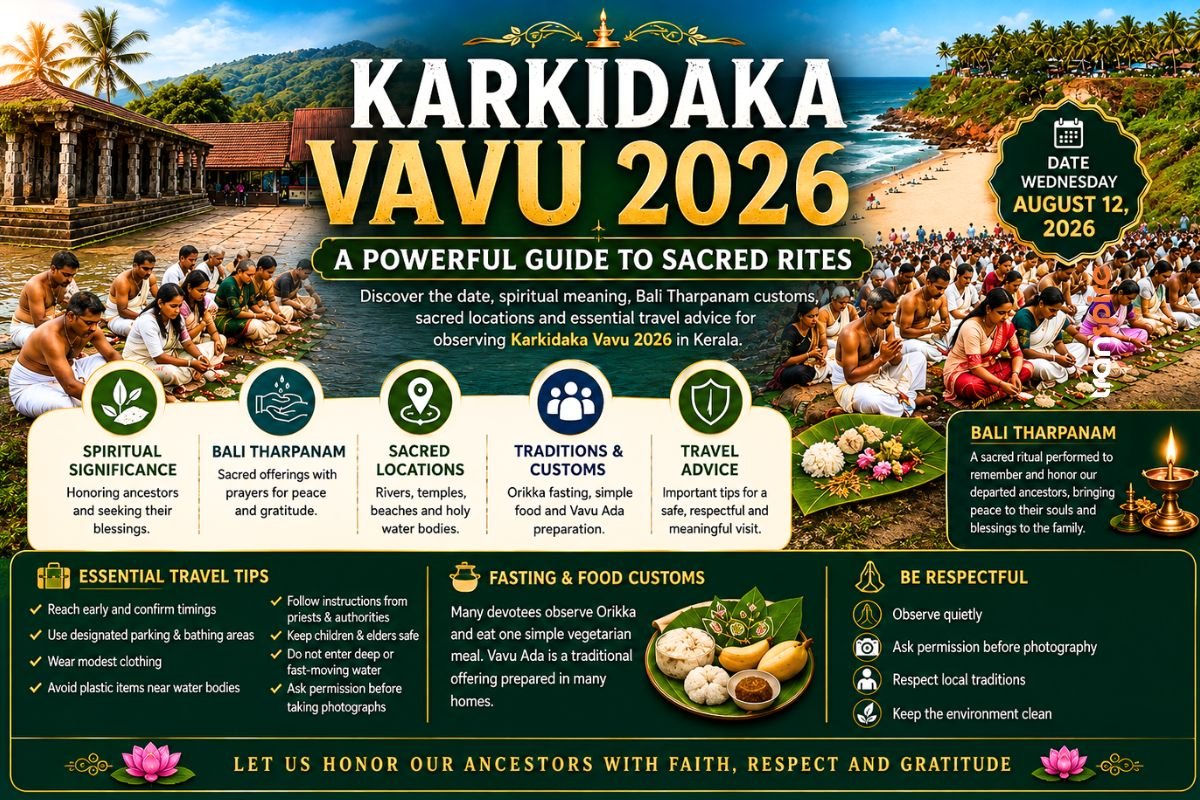
Discover the date, spiritual meaning, Bali Tharpanam customs, sacred locations and essential travel advice for observing Karkidaka Vavu 2026 in Kerala.
Karkidaka Vavu 2026 will be observed across Kerala on Wednesday, August 12, 2026. On this sacred day, families gather beside rivers, temple ponds, beaches, and other water bodies to remember their departed ancestors.
The main ceremony is known as Bali Tharpanam or Vavu Bali. During the ritual, devotees offer prayers and symbolic food to their ancestors. They believe these offerings bring peace to departed souls. At the same time, the ceremony allows families to express love, gratitude, and respect for earlier generations.
Although Karkidaka Vavu is a religious observance, it also offers visitors a meaningful view of Kerala’s living traditions. Therefore, respectful travellers can witness one of the state’s most moving cultural events.
When Is Karkidaka Vavu 2026?
Karkidaka Vavu takes place on the Amavasya, or new moon day, during the Malayalam month of Karkidakam. In 2026, the observance falls on:
| Event | Date |
|---|---|
| Karkidaka Vavu 2026 | Wednesday, August 12, 2026 |
| Malayalam month | Karkidakam |
| Main ritual | Bali Tharpanam |
| Usual starting time | Early morning |
Many ritual centres begin their ceremonies before sunrise. However, exact timings differ according to local customs and temple calculations. Therefore, participants should confirm the schedule with the chosen temple or ritual centre.
Why Karkidaka Vavu Is Spiritually Important
Hindu tradition places great importance on remembering one’s ancestors. Karkidaka Vavu is considered an especially suitable day for offering prayers to departed family members.
Devotees perform Bali Tharpanam to seek blessings for the family and peace for ancestral souls. Moreover, the ceremony encourages people to remember their roots and acknowledge the sacrifices of earlier generations.
What Is Bali Tharpanam?
Bali Tharpanam is an ancestral offering performed with prayers and simple natural materials. A priest or ritual guide usually explains each step to the participants.
The ceremony may include:
- Rice or rice flour
- Black sesame seeds
- Darbha grass or sacred leaves
- Flowers
- Clean water
- Banana leaves
The exact materials can vary between temples and communities. Therefore, participants should follow the instructions provided at their chosen venue.
How the Ritual Is Performed
Participants usually sit near a sacred water body and prepare symbolic offerings. Then, they repeat prayers or chants under the guidance of a priest.
Afterwards, the offerings are respectfully placed in flowing water or at a designated ritual area. Finally, participants bathe or wash their hands before leaving.
Can First-Time Participants Perform It?
Yes. Most major centres arrange priests or trained guides to assist participants. However, registration, ritual kits, and fees may differ between locations.
A Respectful Note for Visitors
Travellers may observe the ceremony from permitted areas. However, they should avoid interrupting prayers, photographing people without permission, or entering restricted ritual spaces.
Fasting and Food Customs
Many devotees follow a simple vegetarian diet before or during Karkidaka Vavu. Some participants also observe a traditional fasting practice known as Orikka.
What Is Orikka?
Orikka generally involves eating only one simple meal during the day. The meal is usually vegetarian and rice-based. However, fasting practices can vary according to family tradition, age, and health.
Common customs include:
- Avoiding meat, fish, and alcohol
- Eating simple vegetarian food
- Maintaining personal cleanliness
- Spending time in prayer
- Avoiding unnecessary celebrations
People with medical conditions should not follow strict fasting without suitable guidance.
Traditional Vavu Ada
Some Kerala families prepare Vavu Ada after completing the rituals. This steamed snack is commonly made with rice flour, coconut, and jaggery. It is wrapped in a banana leaf, which gives it a gentle aroma.
However, food customs differ across Kerala. As a result, Vavu Ada may not be prepared in every household.
Best Places to Experience Karkidaka Vavu 2026
| Sacred location | District | Main attraction |
|---|---|---|
| Aluva Sivarathri Manappuram | Ernakulam | Bali rituals beside the Periyar River |
| Varkala Papanasam Beach | Thiruvananthapuram | Ancestral offerings beside the Arabian Sea |
| Thirunelli Temple | Wayanad | Mountain temple near the Papanasini stream |
| Thiruvallam Parasurama Temple | Thiruvananthapuram | Important centre for ancestral ceremonies |
| Thirunavaya Navamukunda Temple | Malappuram | Sacred setting beside Bharathapuzha |
| Aruvippuram Shiva Temple | Thiruvananthapuram | Peaceful riverside ritual location |
Aluva Sivarathri Manappuram
Aluva is one of Kerala’s best-known centres for Bali Tharpanam. Thousands of devotees gather along the Periyar River. Therefore, authorities often introduce traffic controls and safety arrangements.
Varkala Papanasam Beach
Varkala combines spiritual importance with a dramatic coastal setting. Devotees perform ancestral rites near the sea below the famous cliffs. However, visitors must follow lifeguard and police instructions because sea conditions can change.
Thirunelli Temple
Surrounded by the forests and mountains of Wayanad, Thirunelli Temple offers a quieter spiritual atmosphere. The nearby Papanasini stream has long been associated with ancestral ceremonies.
Essential Travel Tips for Karkidaka Vavu 2026
Major ritual centres can become crowded before sunrise. Therefore, careful preparation will make the visit safer and more comfortable.
- Confirm ritual timings before travelling.
- Reach the venue several hours early.
- Wear modest, comfortable clothing.
- Carry only essential belongings.
- Use designated parking and bathing areas.
- Follow instructions from priests, police, and lifeguards.
- Avoid plastic items near rivers and beaches.
- Keep children and elderly relatives close.
- Do not enter deep or fast-moving water.
- Ask permission before taking photographs.
Public transport and special bus services may operate at major centres. Nevertheless, local arrangements are normally announced closer to the event.
Karkidaka Vavu 2026 is much more than a ritual gathering. It is a powerful expression of remembrance, family connection, and gratitude.
Whether you plan to perform Bali Tharpanam or observe the tradition as a traveller, approach the occasion with patience and respect. Most importantly, check official temple schedules before leaving home because ritual timings, access rules, and crowd arrangements may change.
Frequently Asked Questions
What is the date of Karkidaka Vavu 2026?
Karkidaka Vavu 2026 falls on Wednesday, August 12, 2026. Major rituals generally begin early in the morning.
What is the purpose of Bali Tharpanam?
Bali Tharpanam is performed to remember departed ancestors and pray for their peace. It also expresses gratitude and respect for one’s family lineage.
Where can I perform Karkidaka Vavu Bali in Kerala?
Popular centres include Aluva Sivarathri Manappuram, Varkala Papanasam Beach, Thiruvallam Parasurama Temple, Thirunelli Temple and Thirunavaya.
Can tourists watch the Karkidaka Vavu rituals?
Yes. Visitors may observe from permitted public areas. However, they should dress modestly, remain quiet and avoid photographing participants without permission.
Is fasting compulsory on Karkidaka Vavu?
Fasting customs vary. Some devotees observe Orikka and eat one simple vegetarian meal. Others follow the traditions of their family or temple.
What should I carry for Bali Tharpanam?
Requirements differ by venue. Many centres provide ritual kits containing rice, sesame seeds, sacred grass, leaves and other materials. Confirm the requirements before travelling.