
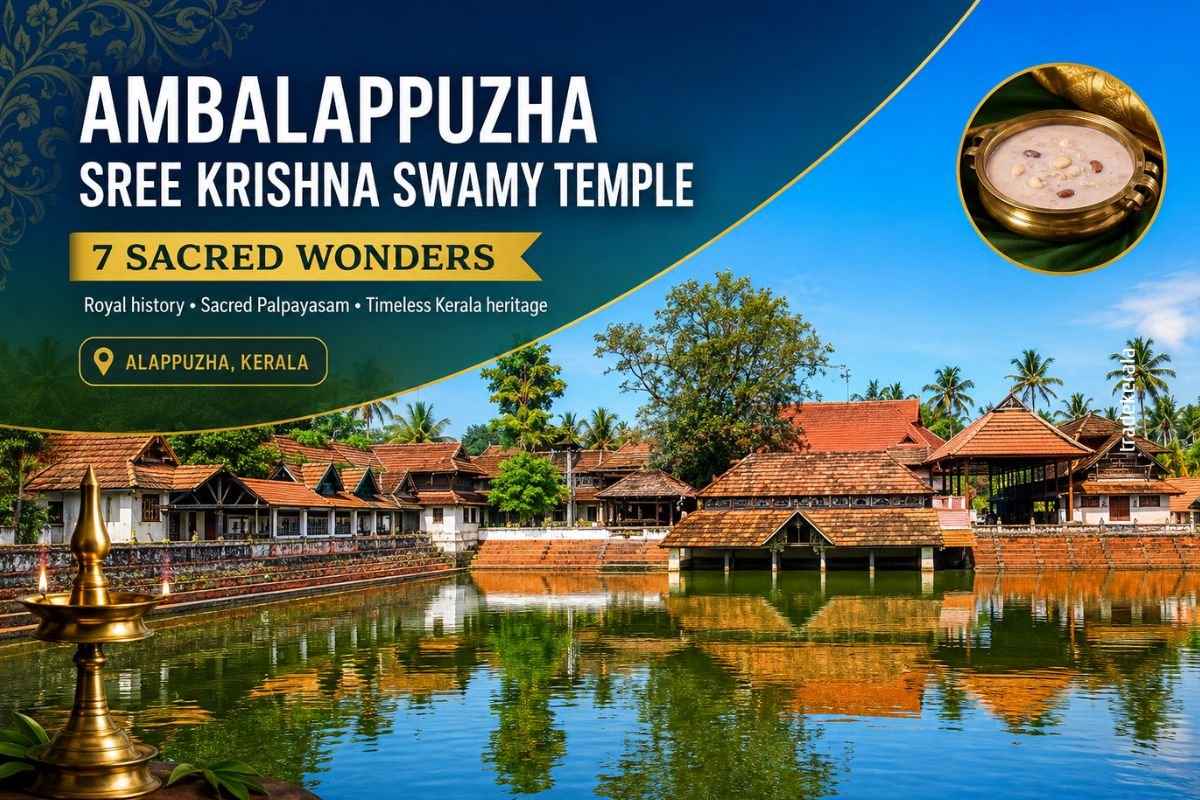
Explore Alappuzha royal temple history, sacred Parthasarathy idol, famous Palpayasam, Kerala murals, colorful festivals and useful visitor tips.
The Ambalappuzha Sree Krishna Swami Temple is one of those rare places where devotion, history, art and food come together.
Additionally, the shrine sits in the quiet town of Ambalappuzha in Kerala’s Alappuzha district, and it feels peaceful. Before you enter its inner courtyard, calm surrounds visitors.
However, the temple offers much more than a traditional darshan.
Its royal past, Parthasarathy idol, Palpayasam, and Ottamthullal connect it with pilgrims and culture lovers.
Therefore, if you are exploring Alappuzha beyond its backwaters, Ambalappuzha Sree Krishna Swami Temple deserves a place on your itinerary.
The Royal History of Ambalappuzha Sree Krishna Swami Temple
Kerala Tourism dates the temple to the period between the 15th and 17th centuries. Pooradam Thirunal Devanarayanan Thampuran, ruler of the former Chembakassery kingdom, is believed to have built it. According to tradition, the ruler dedicated his kingdom to Lord Krishna and governed as the deity’s representative.
The shrine also shares a historic bond with Guruvayur. During Tipu Sultan’s raids in 1789, the sacred idol from Guruvayur Temple was reportedly brought to Ambalappuzha for safekeeping. As a result, devotees still see a deep spiritual link between the two Krishna temples.
Meet Lord Krishna as Parthasarathy
Here, Krishna does not appear as the playful child commonly seen in devotional art. Instead, the deity takes the form of Parthasarathy, the charioteer who guided Arjuna in the Mahabharata.
The idol holds a whip in the right hand and a sacred conch in the left. Together, these symbols suggest guidance, courage and divine protection.
Why Ambalappuzha Sree Krishna Swami Temple Palpayasam Is Famous
For many visitors, Ambalappuzha Palpayasam is almost as memorable as the temple itself. This smooth, sweet milk pudding has a delicate pinkish color and a rich taste. Devotees receive it as prasadam after it has been offered to Lord Krishna.
How the Palpayasam Is Prepared
The recipe uses only a few basic ingredients. Yet careful cooking gives it a flavor that is difficult to copy at home.
Three Simple Ingredients
Traditional Ambalappuzha Palpayasam contains:
- Cow’s milk
- Rice
- Sugar
Slow Cooking Creates the Flavor
Temple cooks prepare the pudding slowly in large bronze vessels called uruli. As the milk reduces, it develops a creamy texture and a gentle caramel note. Therefore, the sweet needs no heavy spices or artificial flavoring.
The Sacred Noon Offering
The Palpayasam is linked with the Ucha Pooja, or noon worship. A popular belief says that Guruvayurappan visits the temple at this time to enjoy the offering. Since availability and booking procedures can change, visitors should inquire in advance.
Ambalappuzha Sree Krishna Swami Temple and Ottamthullal
The temple is also closely associated with the birth of Ottamthullal, Kerala’s lively satirical performance tradition. The poet and performer Kunchan Nambiar is widely believed to have created and first presented the art form on these temple grounds.
Ottamthullal combines expressive movement, rhythm, humor and simple Malayalam. Moreover, its witty verses often challenge social pride and hypocrisy. This made the performance entertaining for ordinary audiences while also giving it a sharp social purpose.
Traditional Kerala Architecture and Murals
The Ambalappuzha Sree Krishna Swami Temple reflects classic Kerala temple architecture. Sloping tiled roofs, timber details and an airy courtyard suit the region’s heavy monsoon climate. Meanwhile, the Chuttambalam forms a protective enclosure around the main shrine.
Look closely at the wall paintings as you walk through the complex. The murals include scenes of the Dashavatara, the ten incarnations of Lord Vishnu. In addition, the temple pond near the entrance adds to the calm atmosphere and supports ceremonial traditions.
Festivals and Living Temple Traditions
The ten-day Arattu festival takes place during the Malayalam month of Meenam, usually in March or April. It begins with Kodiyettam, the ceremonial flag hoisting, and includes rituals such as Uthsavabali, Seva and Pallivetta. Finally, the Arattu procession travels to the nearby Erattakulangala Mahadeva Temple for the holy bath.
The temple is also known for Pallippana, a ritual held once every 12 years. Furthermore, the Champakulam Moolam boat race commemorates the journey connected with the installation of the Ambalappuzha idol. Today, it remains a major cultural event and traditionally opens Kerala’s snake-boat racing season.
How to Visit Ambalappuzha Sree Krishna Swami Temple
The temple stands about 14 kilometers south of Alappuzha town. Ambalappuzha railway station is the nearest rail stop, while Alappuzha station offers additional connections. Road travelers can reach the town easily via NH 66.
Before visiting, keep these practical tips in mind:
- Wear modest, traditional clothing.
- Men may need to remove shirts before entering designated inner areas.
- Ask ahead about Palpayasam booking and collection.
- Avoid photography where temple rules prohibit it.
- Check current opening hours, especially during festivals.
Morning visits are often cooler and quieter. However, the noon period is meaningful for devotees interested in the Palpayasam offering.
A Sacred Alappuzha Experience
The Ambalappuzha Sree Krishna Swami Temple is more than a place of worship. It preserves royal history, classical art, community festivals and one of Kerala’s best-loved temple offerings. Above all, its peaceful setting gives visitors a chance to slow down and experience Alappuzha’s spiritual side. Whether you come for devotion, heritage or Palpayasam, the journey leaves a lasting memory.
FAQ Section
1. Why is Ambalappuzha Sree Krishna Swami Temple famous?
The temple is famous for its Parthasarathy idol, Ambalappuzha Palpayasam, Kerala murals, historic festivals and association with the birth of Ottamthullal.
2. What is special about Ambalappuzha Palpayasam?
It is a sacred sweet pudding made from milk, rice and sugar. Slow cooking gives it a creamy texture, pinkish color and gentle caramel flavor.
3. Who built the Ambalappuzha temple?
Pooradam Thirunal Devanarayanan Thampuran of the former Chembakassery kingdom is believed to have built it between the 15th and 17th centuries.
4. How far is the temple from Alappuzha?
The temple is about 14 kilometers south of Alappuzha town. Visitors can travel by train, bus, taxi or private vehicle.
5. Is there a dress code at the temple?
Visitors should wear modest, traditional clothing. Men may be asked to remove shirts in designated inner areas. Confirm current rules before visiting.
6. Which festivals are celebrated at the temple?
Important traditions include the ten-day Meenam Arattu festival, the 12-year Pallippana ritual and celebrations linked with the Champakulam Moolam boat race.