
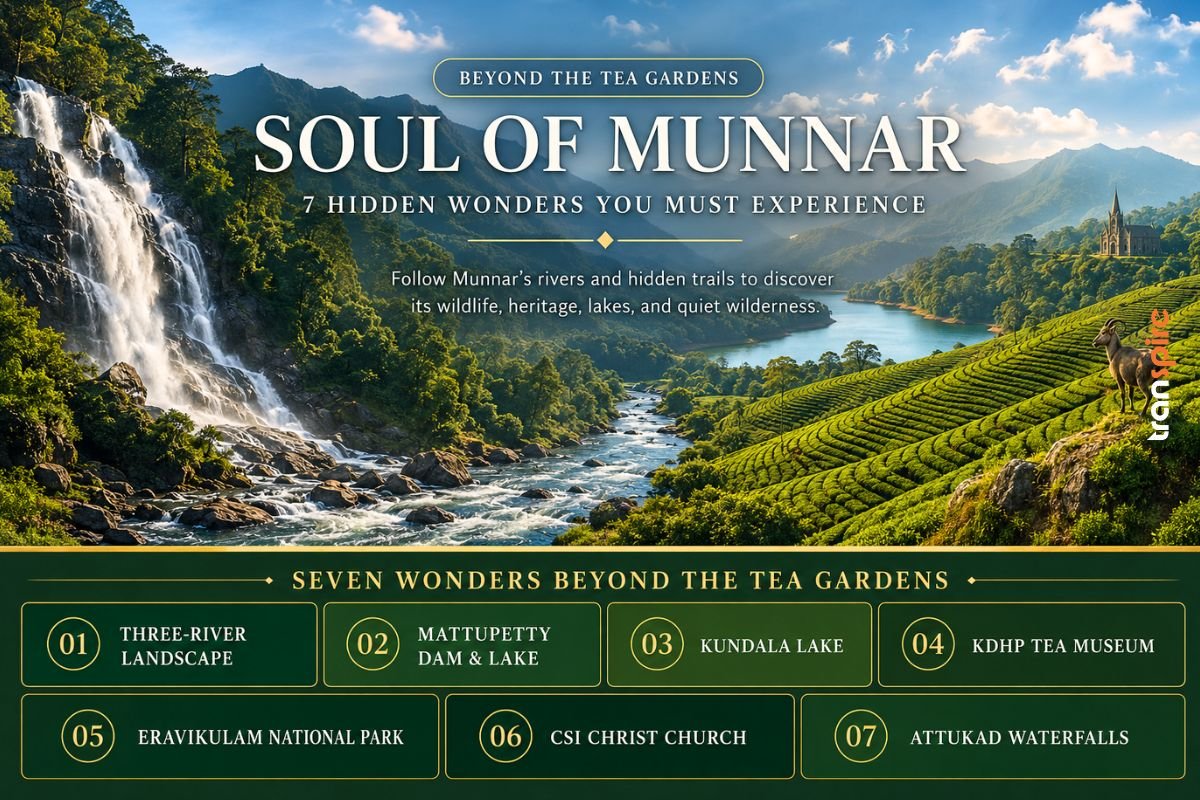
Explore Munnar beyond its tea gardens through hidden rivers, peaceful lakes, rare wildlife, colonial landmarks, scenic trails, and immersive hillside stays.
The Soul of Munnar is not found in tea plantations alone. Those bright green slopes are beautiful, of course. However, Munnar becomes far more interesting when you follow its rivers, enter its high grasslands, and explore its colonial past. Beyond the familiar viewpoints, you will find forest paths, old stone buildings, quiet reservoirs, and waterfalls hidden between the hills.
Therefore, do not rush through this famous Kerala hill station. Slow down, leave the busiest roads, and look beyond the postcard views. That is where Munnar begins to feel like a living mountain landscape rather than a sightseeing checklist.
Why Three Rivers Reveal the Soul of Munnar
Munnar’s name is widely linked to the Malayalam words moonu aar, meaning “three rivers.” The town developed near the meeting of the Mudhirapuzha, Nallathanni, and Kundaly rivers. These waterways shaped the valleys long before tea became the region’s best-known attraction.
Moreover, water still defines the journey. It fills reservoirs, feeds waterfalls, supports forests, and brings a cool freshness to the air. Once you understand that connection, the Soul of Munnar becomes easier to see.
Seven Wonders Beyond Munnar’s Tea Gardens
You do not need to ignore the tea estates. Instead, use them as the starting point for a richer trip. These seven experiences reveal another side of Munnar:
The three-river landscape: Notice how streams and river valleys guide the roads around town.
Mattupetty Dam and Lake: Surrounded by hills, this calm reservoir offers scenic views and boating.
Kundala Lake: Go early for softer light, cooler air, and a quieter lakeside experience.
KDHP Tea Museum: Located at Nallathanni Estate, the museum explains Munnar’s plantation history through old machinery, photographs, and exhibits.
Eravikulam National Park: Its high-altitude shola forests and grasslands protect the endangered Nilgiri tahr.
CSI Christ Church: Built in 1910, this stone church features Gothic design, stained-glass windows, memorial plaques, and an old cemetery.
Attukad Waterfalls: Forested slopes and tea-covered hills create a dramatic setting around this powerful cascade.
Together, these places connect water, wildlife, history, and local life. As a result, they show why Munnar deserves more than a quick weekend visit.
Colonial History and the Soul of Munnar
British and Scottish planters transformed Munnar into a major plantation region during the late nineteenth and early twentieth centuries. Although that period changed the land deeply, it also left visible reminders across the hills.
CSI Christ Church is the clearest example. Its rough stone walls feel striking against the soft green landscape. Inside, stained glass and brass memorials recall the planter community that once lived here. Nearby, old estate bungalows often feature wooden floors, fireplaces, and broad verandas. However, many remain on private property, so visit only where access is permitted.
You may also notice older bridges and estate roads while traveling through the valleys. These details add texture to the Soul of Munnar, especially for travelers who enjoy architecture and local history.
Where to Stay for a Deeper Munnar Experience
Your hotel can shape how closely you connect with the landscape. Therefore, choose your base according to the experience you want.
Blanket Hotel & Spa: Waterfall and Hill Views
Blanket Hotel & Spa sits near Attukad Waterfalls. The property offers guided walks with an in-house naturalist through tea plantations towards the falls. Guests can also explore nearby village scenery, watch birds, cycle, or join yoga sessions. Consequently, it suits travelers who want comfort with easy access to the hills.
Blanket Riverside Resort & Spa: Life Beside the River
Blanket Riverside Resort & Spa offers a lower-valley setting beside the Muthirapuzhayar. Its listed experiences include a traditional bamboo-boat river crossing and guided birdwatching. In addition, the river-and-garden setting creates a slower, more peaceful stay. Always confirm activity schedules before booking, since weather and water conditions may affect availability.
Plan a Day Around the Soul of Munnar
| Time | Focus | Suggested experiences |
|---|---|---|
| 7:00–10:00 a.m. | Peaks and wildlife | Eravikulam National Park or a permitted hill trek |
| 11:00 a.m.–2:00 p.m. | Heritage and culture | KDHP Tea Museum and CSI Christ Church |
| 3:00–5:30 p.m. | Rivers and lakes | Mattupetty, Kundala, or a riverside walk |
A Practical One-Day Route
- Begin early at Eravikulam, when the hills feel fresh and visibility is often better.
- Return to town for the museum and church during the warmer middle hours.
- Finish beside Mattupetty or Kundala Lake as the afternoon light softens.
Early-Start Advice
Check official opening hours before leaving. Eravikulam usually closes during the Nilgiri tahr calving season in February and March.
What to Carry
Bring water, a light rain jacket, comfortable shoes, and a small bag for your waste.
Responsible Travel Reminder
Stay on permitted paths, avoid loud music, and never feed wildlife. These simple choices help protect Munnar’s fragile mountain ecosystem.
Discover the Soul of Munnar Slowly
Tea gardens may introduce you to Munnar, but they do not tell the whole story. Rivers, reservoirs, wildlife, waterfalls, and colonial landmarks give the destination its deeper character. So, allow time for quiet walks, local stories, and unplanned stops. When you travel slowly and respectfully, the Soul of Munnar reveals itself in every misty valley and forest stream.
Frequently Asked Questions
What is the real meaning of Munnar?
Munnar is commonly linked to the Malayalam phrase moonu aar, meaning “three rivers.” It refers to the Mudhirapuzha, Nallathanni, and Kundaly rivers.
What can I explore in Munnar besides tea plantations?
Visit Eravikulam National Park, Mattupetty Dam, Kundala Lake, Attukad Waterfalls, KDHP Tea Museum, CSI Christ Church, and permitted nature trails.
When is the best time to explore Munnar’s rivers and trails?
October to February usually brings cool weather for sightseeing and walking. However, monsoon months make waterfalls stronger, while trails may become slippery.
Is Eravikulam National Park open throughout the year?
No. The park usually closes during February and March for the Nilgiri tahr calving season. Check its official website before traveling.
Where can travellers experience riverside living in Munnar?
Several properties sit near rivers and waterfalls. Blanket Hotel & Spa overlooks the Attukad area, while Blanket Riverside Resort & Spa offers a river-and-garden setting.
How many days are ideal for discovering the Soul of Munnar?
Plan at least two or three days. This gives you enough time for wildlife, heritage sites, lakes, waterfalls, and a relaxed nature walk.
1 thought on “Ultimate Guide to Munnar: 7 Hidden Wonders You Must Experience”
Comments are closed.